There is something special about the travel moments we never planned. Sometimes, they become the memories we carry long after the holiday is over.
I remember sitting outside our accommodation in Rimetea, a small village in Transylvania, watching the mountains as local people began singing traditional Hungarian folk songs along the village road. There was no performance or organized event. It seemed to be something they did regularly on weekends, simply enjoying their time together. Their voices and traditional instruments filled the evening with warmth. For a moment, I felt less like a visitor and more like someone who belonged there.
It was a simple experience, yet it left me with a peace that’s hard to put into words.
Over the years, I have realized that these are the moments I travel for. Not necessarily the famous landmarks or the number of attractions I can fit into a day, but the unexpected encounters, outdoor adventures, local traditions, and little discoveries that make a destination feel alive.
This is what slow travel means to me: experiencing more while seeing less.
What Is Slow Travel, Really?
Slow travel is not about moving at a snail’s pace, avoiding popular attractions, or spending an entire vacation in one place. It is about being intentional with your time and choosing experiences that allow you to connect more deeply with your surroundings.
Instead of visiting five destinations in a week, you might choose two and explore each one properly. Instead of rushing from one landmark to another, you might spend an afternoon wandering through a historic neighborhood, discovering a local bakery, or taking a scenic road through the countryside.
It is also about leaving room for spontaneity.
I still enjoy visiting famous attractions, castles, museums, and beautiful historic towns. But I’ve learned to balance sightseeing with nature walks, outdoor activities, local food, and moments when I simply have nowhere particular to be.
A destination offers so much more than what appears on a tourist map.
Why Slow Travel Is Good for the Mind and Soul
One of the greatest advantages of slowing down is that it changes how we experience our surroundings. We become more attentive, less preoccupied with what comes next, and more open to unexpected discoveries.
Less Rushing, More Room to Breathe
Constantly changing accommodations, following strict schedules, and trying to see everything can turn a vacation into another demanding routine.
Traveling more slowly can reduce some of that logistical pressure. You have more time to enjoy breakfast, take a detour, explore a neighborhood, or spend an extra hour somewhere you love. You no longer have to treat every moment as an opportunity that must be optimized.
A Deeper Connection with Nature
Some of my happiest travel memories involve being outdoors.
I love horseback riding, cycling, hiking, and exploring forests. These activities allow me to experience a landscape rather than simply admire it from a viewpoint.
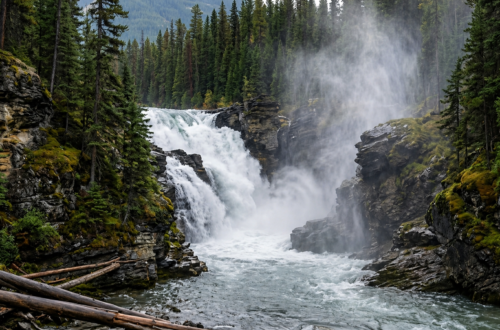
I remember walking through a forest in Lucerne, Switzerland, near Château Gütsch. We had decided to take a little walk in the woods behind the hotel. It was a pleasant day, and we were simply enjoying the trail when a graceful deer suddenly crossed the path quite close to us.
The encounter lasted only seconds. I stopped, laughed, and even cried with happiness. I wished I could have watched it longer. That tiny moment made my day. It reminded me that some of the most wonderful travel experiences cannot be booked, scheduled, or added to an itinerary.
Meaningful Experiences Create Lasting Memories
Research offers some interesting insights into the relationship between immersive travel experiences and well-being.
A 2020 study published in the Journal of Sustainable Tourism, titled Shaping Tourists’ Wellbeing Through Guided Slow Adventures, explored how activities such as canoeing, stargazing, and foraging can encourage a slower perception of time, immersion in nature, and a sense of togetherness. The researchers interviewed ten outdoor adventure guides and identified how these experiences could support tourists’ psychological well-being.
These studies don’t establish that slow travel itself treats anxiety or improves health for every traveler. However, they offer interesting evidence about the potential value of nature immersion, meaningful activities, and spending time away from everyday routines.
For me, slow travel is a lifestyle choice. It means listening to what my mind and body need, enjoying the present, and choosing experiences that make me feel fulfilled.
Experience More While Seeing Less: The Beauty of Meaningful Adventures
Slow travel does not mean doing less. Sometimes, it means doing something completely different from conventional sightseeing. Some of my most fulfilling travel experiences have involved animals, outdoor adventures, and discovering landscapes at a different pace.
Exploring Rimetea and Colțești by E-Bike
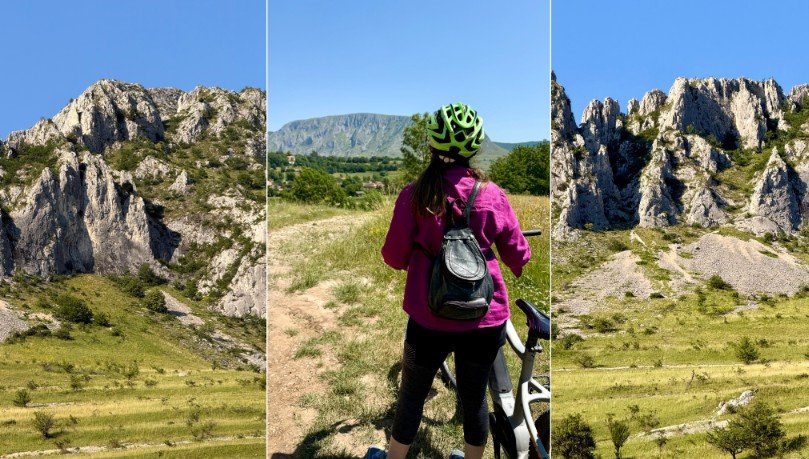
During our stay at Casa Weiss, right in the center of Rimetea, Romania, we rented e-bikes from a place directly across from our accommodation.
We spent approximately two and a half hours cycling around Rimetea and towards the neighboring village of Colțești. Our goal was to reach the area near the ruins of Colțești Fortress. We rode until the path became narrower and steeper, getting as close to the fortress as we could.
The road between the two villages made me a little nervous at times because cars were passing by, although traffic was relatively light. Still, the experience was exhilarating.
There was something incredibly rewarding about discovering the countryside on two wheels, enjoying the fresh air, and feeling that little rush of adrenaline and excitement. It was summer, and the heat eventually made us return. Otherwise, I would have happily kept the bike all day.
Finding Freedom on Horseback in Bucovina
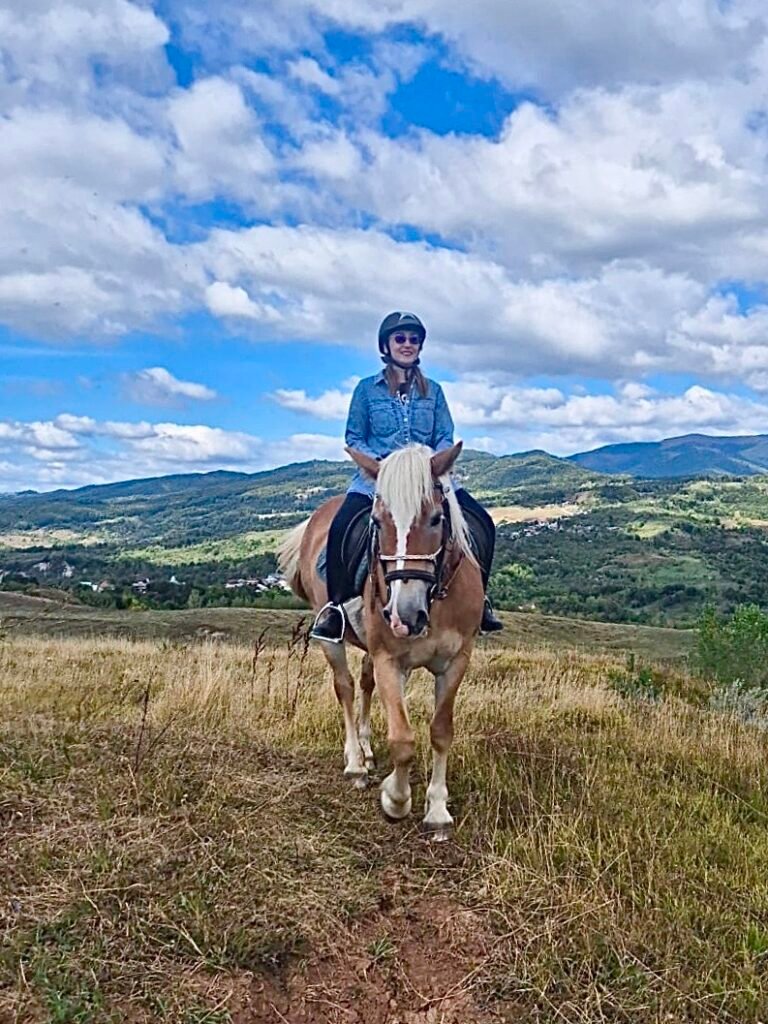
Horseback riding is one of the activities I actively look for when planning certain trips. Sometimes I discover these opportunities unexpectedly, but whenever I can, I make room for them.
In Vatra Dornei, I had the opportunity to ride independently across a mountain plateau for about an hour. I know how to ride, and being able to guide the horse myself made the experience particularly rewarding.
I love horses. I enjoy spending time with them, petting them, and communicating with them. Something about their presence makes me happy.
I have also ridden in Suceava, where we explored a forest with a guide and a small group, and in Dobrogea, where I joined a group of around ten riders. The guide walked alongside us while I handled my own horse.
Interestingly, I sometimes feel more comfortable exploring uneven terrain on horseback than walking alone. Perhaps it is the different balance and movement, but I find the experience incredibly fulfilling.
Time seems to pass differently when I am riding. I often wish these adventures could last longer.
Discovering the Unexpected Beauty of the Măcin Mountains
The Măcin Mountains in Dobrogea, Romania, are not particularly high, but their natural beauty is remarkable.
During our horseback adventure, I was amazed by the landscape and biodiversity. We encountered tortoises, spotted a snake crossing our path, and saw fields filled with beautiful wild peonies.
Riding up the mountain was breathtaking. Most of the ride was peaceful, though the uneven terrain and the horse’s occasional stubbornness added small moments of adventure.
I remember wishing I’d brought a camera to capture everything.
It reminded me that a destination doesn’t need dramatic mountain peaks or famous viewpoints to offer extraordinary experiences. Sometimes, the smallest details are the ones that make a place unforgettable.
Europe’s Hidden Gems Are Best Discovered Slowly
I enjoy visiting popular European destinations, but there is a particular joy in discovering places that are not on every tourist’s itinerary. Small towns, unexpected architectural details, quiet gardens, and charming streets often become a trip’s highlights.
Rimetea, Nessebar in Bulgaria, Český Krumlov and Telč in Czechia are among the places I have enjoyed exploring. Each offers a different atmosphere and a reason to wander beyond the main sights.
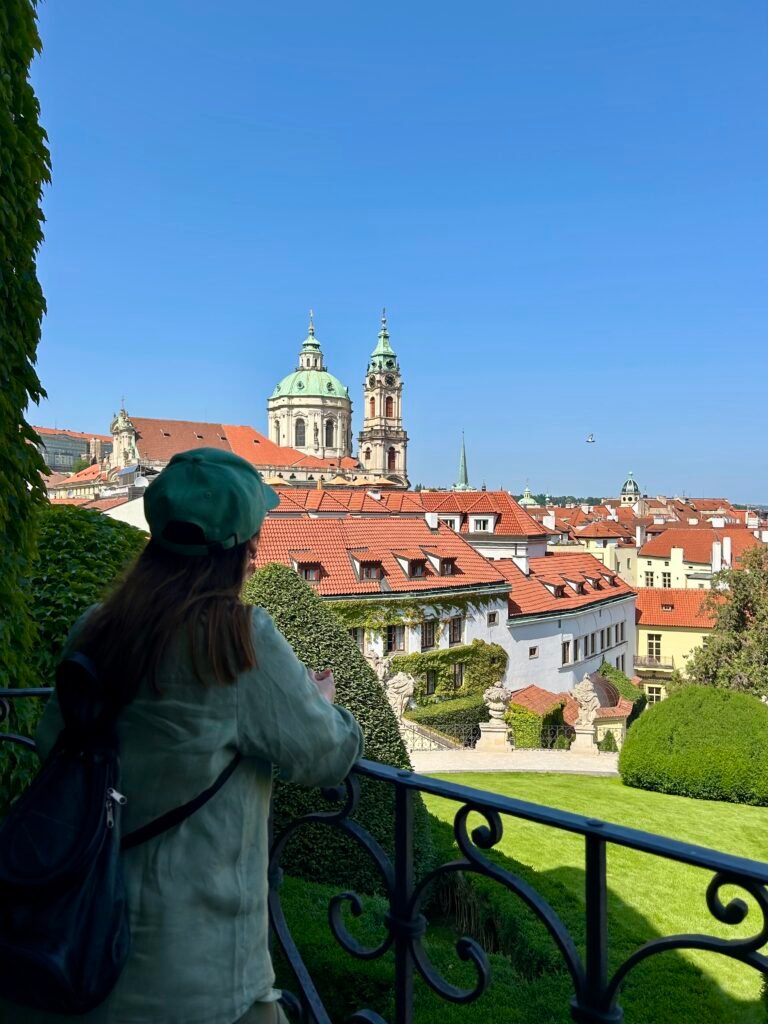
I also love finding unexpected corners within famous destinations. In Prague, for example, discovering Vrtba Garden offered a different experience from simply walking between the city’s best-known landmarks.
These places remind me that hidden gems are not always remote or completely unknown. Sometimes, they are simply places we discover when we allow ourselves to look beyond the obvious.
Leave the Map Behind and Get Lost
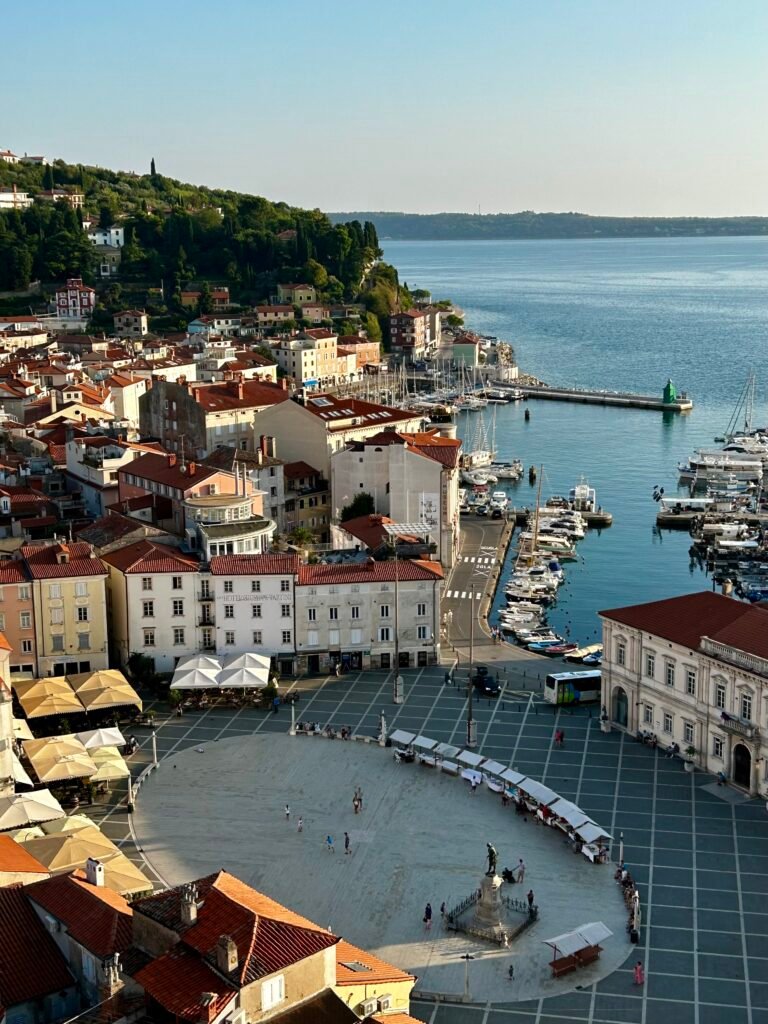
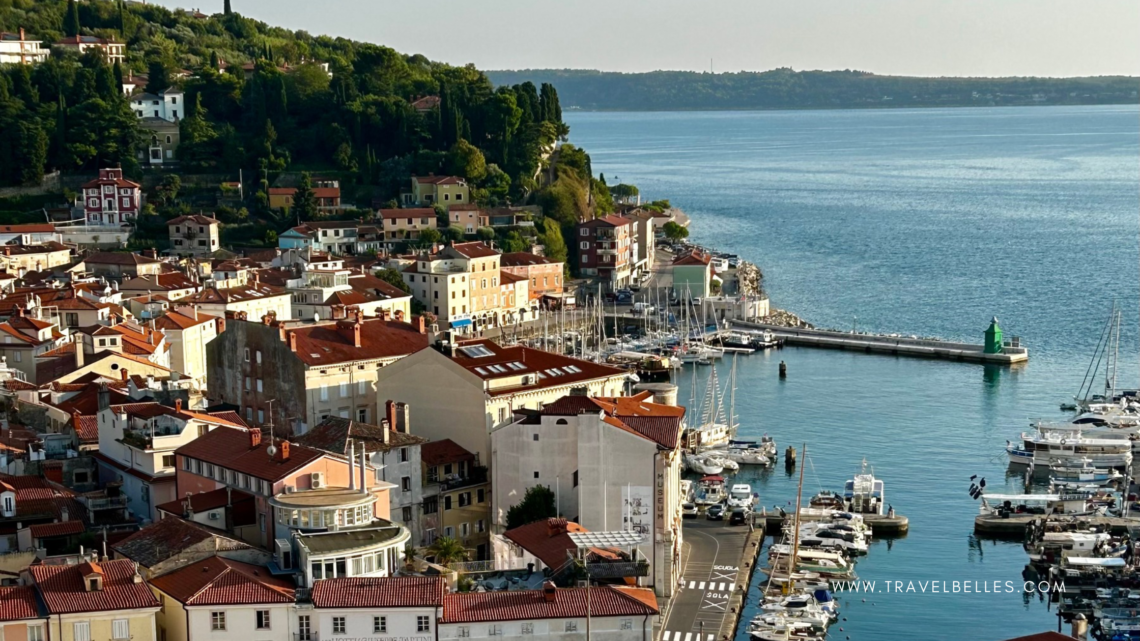
One of my favorite pieces of travel advice came from a local man in Piran, Slovenia.
We were walking through the old town’s narrow streets, consulting our map and trying to decide where to go next. A local man who worked in the area noticed us and suggested that we put the map away and simply get lost in the old town.
We tried our best to follow his advice.
Instead of focusing on directions, we enjoyed the beautiful houses, churches, and little piazzas. We also discovered some delicious local seafood. I even learned how to properly open and eat langoustines!
It was a lovely reminder that connecting with a destination can happen through ordinary experiences: enjoying local food, talking to residents, and discovering how people live their everyday lives.
Sometimes, the best travel advice comes from someone who actually calls the place home.
How to Practice Slow Travel: 6 Simple Ways to Start
You don’t need to completely change your travel style to embrace slow travel. A few small adjustments can make a meaningful difference.
1. Choose Fewer Destinations
Resist the temptation to visit several towns in just a few days. For a small village, two nights might be enough. For a larger city, I generally prefer at least three nights. Adjust your stay according to what the surrounding area has to offer.
2. Experience More Than Just the Main Attractions
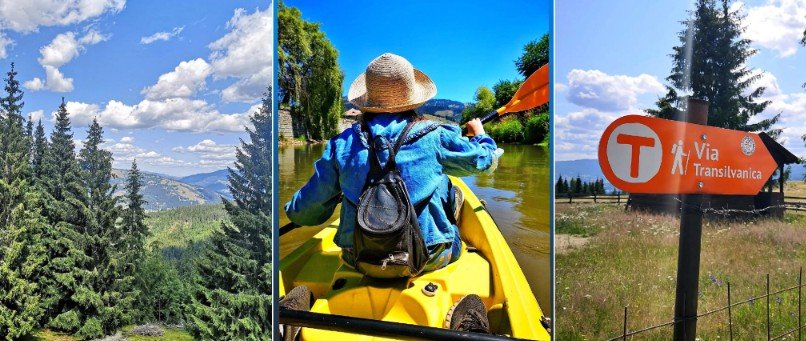
Combine sightseeing with activities that allow you to experience the destination differently. Try cycling, horseback riding, canoeing, cooking classes, or a walk through a nearby forest.
3. Explore Local Life
Visit neighborhood bakeries, farmers’ markets, and small restaurants. Try regional dishes and talk to locals when the opportunity arises. These experiences can reveal a side of a destination that guidebooks rarely capture.
4. Take the Scenic Route
When traveling by car, consider local roads instead of always choosing the fastest highway. You might discover a beautiful village, an unexpected viewpoint, or a lovely place to stop for lunch.
5. Leave Room for Spontaneity
Not every hour needs to be planned. Sometimes, fewer reservations and a more flexible schedule allow you to follow your intuition. Of course, booking ahead is still sensible for popular attractions, busy destinations, and peak-season accommodation.
6. Let Go of the Fear of Missing Out
You cannot see everything in one vacation, and you do not have to. I still occasionally struggle with FOMO, but I have become more comfortable accepting that there will always be another attraction, another museum, or another beautiful street to explore.
A good compromise is to combine structured sightseeing with unplanned time. Spend half a day visiting a few attractions and the other half wandering, relaxing, or discovering somewhere unexpected.
You do not have to choose between the two.
The Art of Being There
My ideal travel day isn’t necessarily extraordinary.
It might start with a delicious breakfast at a hotel or a local bakery, followed by some sightseeing and exploring. Later, I might take a walk through a forest, enjoy a leisurely brunch, or discover a hidden architectural gem. I like ending the day somewhere peaceful, without feeling that I still have ten things left to do.
Over the years, my approach to travel has gradually changed. I have become more comfortable with spontaneity, less attached to rigid itineraries, and more interested in experiencing an area properly rather than constantly moving on to the next destination.
I still love beautiful castles, famous landmarks, and popular cities. But I also treasure the sound of locals singing in a little Transylvanian village, a deer crossing a forest path, the connection I feel when riding a horse, and the simple pleasure of getting lost in a coastal town.
These moments are not necessarily impressive on a map or easy to fit into a travel checklist. Yet they are the experiences that stay with me.
Perhaps the art of slow travel is not really about how slowly we move, but about how deeply we experience the places we visit. We don’t need to see everything to fully experience a destination. Sometimes, we just need to put the map away, take the scenic route, and allow ourselves to be there.